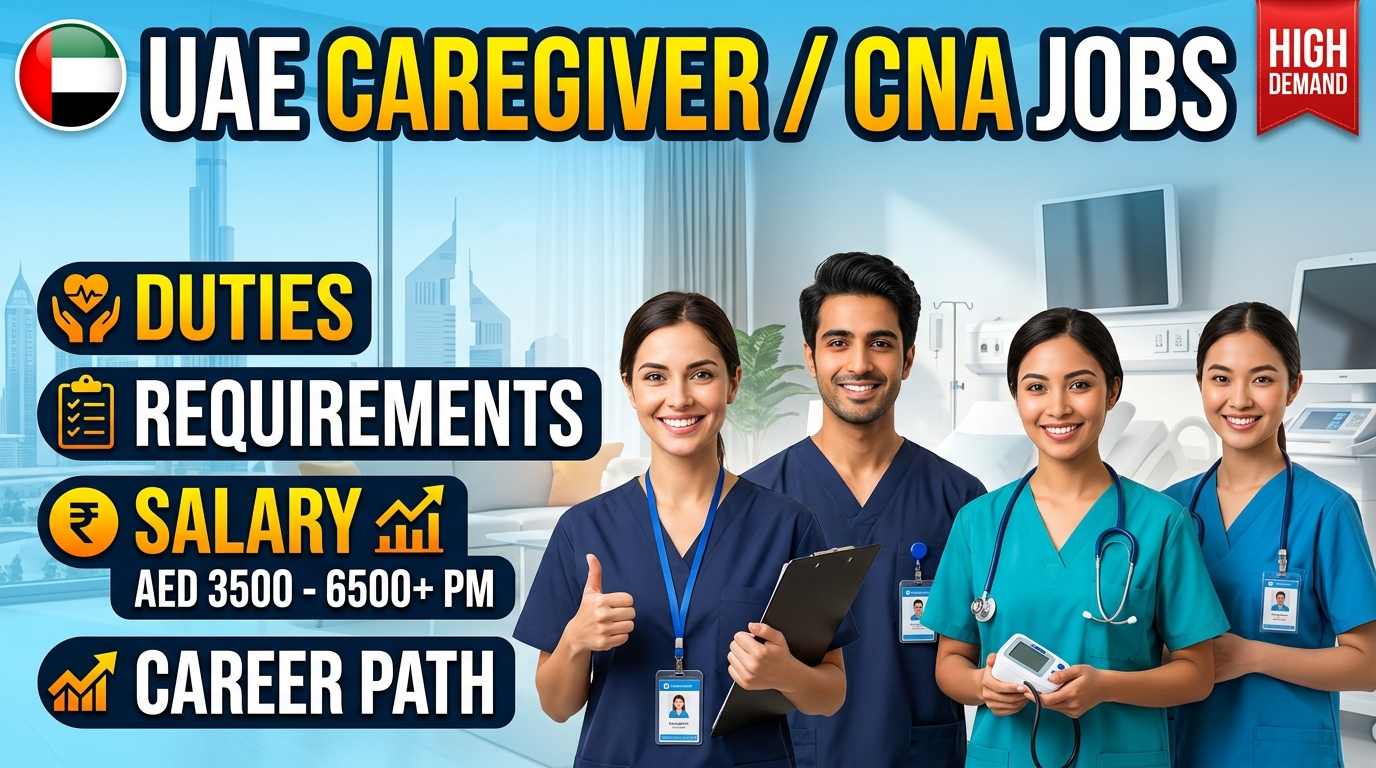
Introduction: The Role in the UAE
In the UAE, the terms “Caregiver” and “CNA” (Certified Nursing Assistant) are often used in similar contexts, though CNAs generally hold a formal license or certification to work within medical facilities. Caregivers can work in private homes or residential care.
Both roles are vital to the UAE’s healthcare system, providing essential front-line personal care to patients who are elderly, disabled, chronically ill, or recovering from surgery.
1. Duties and Responsibilities
The primary goal of a caregiver or CNA is to assist patients with activities of daily living (ADLs) and maintain their comfort and dignity. The specific settings dictate the exact scope:
Core Caregiving Duties (Applies to both)
- Personal Hygiene: Bathing, grooming, dressing, toileting, and oral care.
- Mobility Assistance: Lifting, turning bedridden patients to prevent bedsores, and assisting with transfer (bed to wheelchair, etc.).
- Nutritional Support: Feeding patients, assisting with meal times, and sometimes basic meal preparation.
- Companionship: Providing emotional support, conversation, and friendly company to reduce loneliness.
- Observation: Monitoring patients for changes in condition, physical injuries (bruises, skin breakdown), or emotional distress.
- Housekeeping: Maintaining a clean and sanitized environment in the patient’s immediate area (making beds, laundry for the patient).
Specialized CNA/Medical Facility Duties
When working under the supervision of Registered Nurses (RNs) in hospitals or clinics, CNAs may also perform:
- Vital Signs: Measuring and recording temperature, pulse, respiration, and blood pressure (TPR & BP).
- Documentation: Recording patient intake of food/fluids and entries on flow sheets.
- Medical Procedures: assisting nurses with physical examinations, ostomy care (colostomy/ileostomy) per instructions, and rehab procedures like range of motion exercises.
- Medical Technology: Basic use of medical charting or health information software.
2. Requirements
The requirements to work in the UAE vary significantly depending on whether you want to work as a Licensed Assistant Nurse (CNA level) in a facility or as a Home Caregiver.
Requirements for Facilities (Hospitals, Clinics, Assisted Living)
To work in a formal healthcare setting, you must be licensed by the respective Emirate’s health authority (DHA in Dubai, DoH in Abu Dhabi, MOHAP in other Emirates).
- Education: Typically requires a High School Diploma PLUS a certified Nursing Assistant or Caregiver training program certificate (courses usually last 4–12 weeks). For foreign applicants, some authorities may require a nursing diploma from their home country.
- Licensing: Must pass the required authority exam (e.g., DHA Assistant Nurse exam).
- Experience: Most facility roles require 1 to 3 years of prior experience.
- Skills: Proficiency in English (reading, writing, speaking) is essential for charting and team communication.
Requirements for Home Care
Many families hire trained professionals for private household care.
- Education: A minimum of a high school diploma. Passing a basic health screening is standard.
- Certification: While not always legally mandatory for private hire, holding an internationally recognized caregiver or CNA certificate significantly increases employability and salary.
- Age: Usually 18 years or older.
- Training: Courses approved by KHDA (Dubai) or ACTVET (Abu Dhabi) cover essential skills like communication, legal issues, stress management, dementia care, and basic health & safety.
3. Salary and Compensation (Late 2026 Data)
Salaries in the UAE are generally tax-free, but they fluctuate based on the Emirate, the employer type (hospital vs. home care), experience, and nationality.
| Experience Level | Monthly Salary Range (AED) | Average Monthly Salary (AED) |
| Fresh/Entry Level (0-1 Year) | 2,000 – 3,300 | 3,075 |
| Mid-Level (1-6 Years) | 3,000 – 4,500 | 3,400 |
| Senior/Experienced (6+ Years) | 3,500 – 6,000 | 5,000+ |
Factors Influencing Salary:
- Location: Dubai and Abu Dhabi generally offer slightly higher salaries (averaging around AED 3,200–3,500) compared to other Emirates.
- Facility Type: Large private hospital groups often pay better and offer more benefits than smaller home care agencies or private family arrangements.
- Visa Sponsorship: Salaries may differ depending on whether the employer provides visa sponsorship, accommodation, and transportation, or if the salary is “all-inclusive.”
4. Career Opportunities and Progression
Starting as a Caregiver or CNA in the UAE is an accessible gateway into the healthcare workforce.
Current Job Market
There is a growing demand for these roles, particularly in:
- Home Healthcare: UAE families increasingly prefer private, personalized care for elderly members or those with chronic conditions.
- Hospitals and Specialty Clinics: UAE is rapidly expanding its healthcare infrastructure, creating constant vacancies.
- Long-Term Care Facilities: Such as nursing homes and assisted living centers.
Pathways for Advancement
With experience and further education, Caregivers and CNAs can advance their careers:
- Specialization: Obtaining additional certifications in areas like Geriatrics, Pediatrics, or Oncology allows transition into niche roles in specialty clinics.
- Education Upgrading: This is the most common path to significantly higher pay. Assistants use their experience to enroll in advanced nursing programs to become a Licensed Practical Nurse (LPN) or Registered Nurse (RN).
- Leadership: Experienced assistants in larger facilities can progress to roles like Caregiver Supervisor, Trainer, or Head of Nursing Assistants.